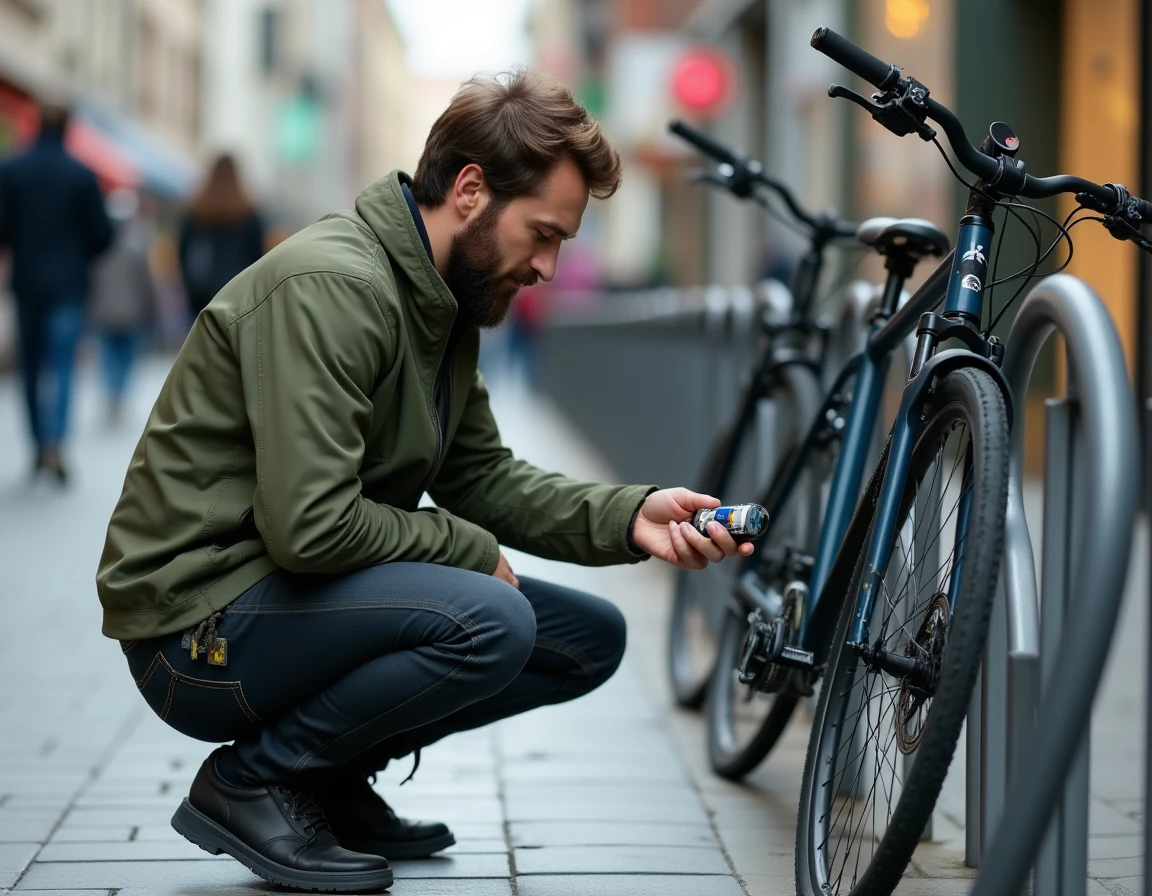
You just bought a combination lock at Decathlon, and the default combination (often 0000) doesn’t inspire confidence. Customizing it with a code that only you know is the first thing to do before even locking your bike. The process takes less than two minutes, but a mistake at the wrong moment can block your access to your own lock.
Avoiding Lockout When Changing the Code of a Decathlon Lock
The most concrete risk when you want to change the code of the Decathlon lock is not choosing a bad code. It’s releasing the mechanism too early, before the new combination is saved.
Most combination locks work with a lever, a push button, or a reset pin. This component must remain engaged throughout the entry of the new code. If you release it before aligning all the dials, the lock saves a partial code, sometimes different from what you thought you had chosen.
Note your new code before validating the process. Write it down on your phone or on a piece of paper stored at home. If the saved code does not match what you had in mind, you will have no way to retrieve it without contacting customer service.
Another common trap: attempting to reset while the lock is locked onto the bike. The lock must be open, in the unlocked position, with the current code correctly displayed on the dials. Any attempt in the closed position does not trigger programming mode.

Reset Procedure According to the Type of Combination Lock
Decathlon sells several families of combination locks: cables, chains, and padlocks. The code changing procedure is not universal. It depends on the locking mechanism specific to each model.
Cable Lock with Dials
This is the most common model for short stops. The reset generally follows this pattern:
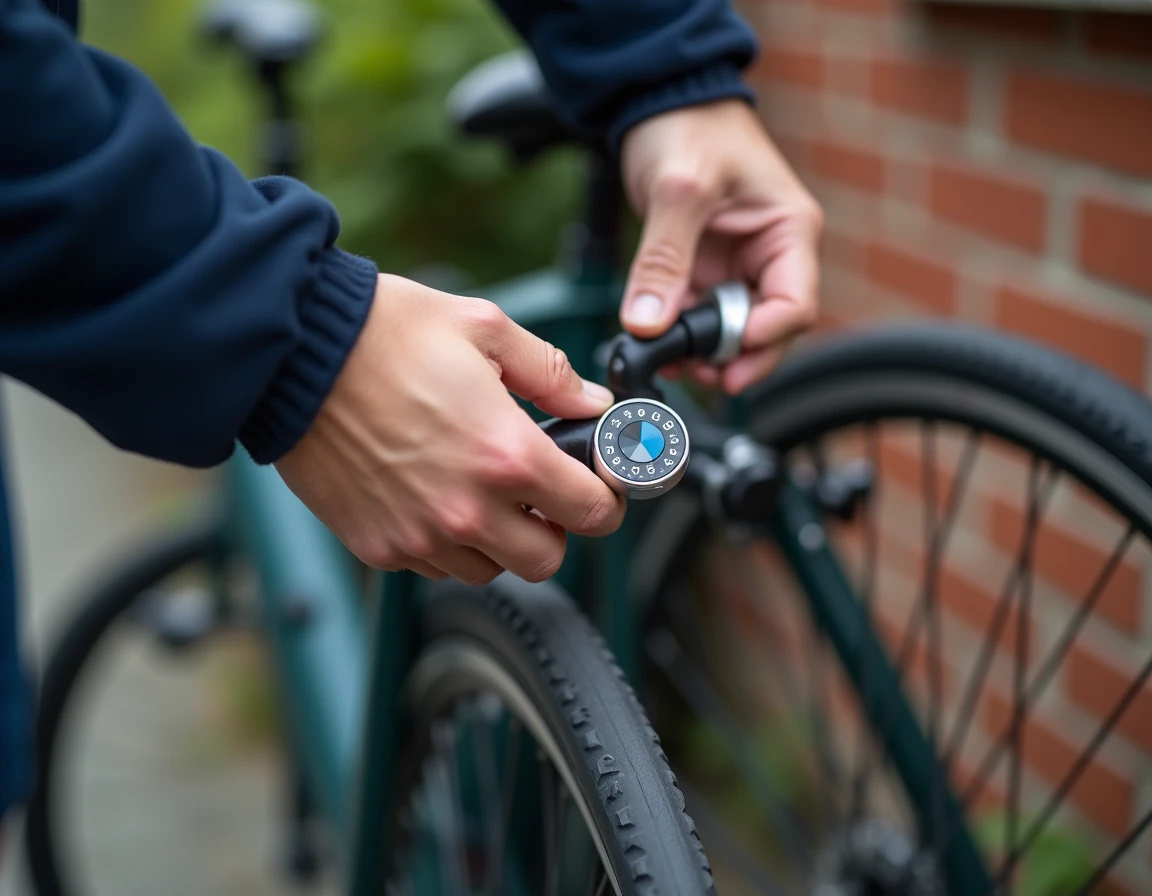
- Open the lock by aligning the current code (default or customized) on the dials.
- Locate the lever or small reset notch, often located near the base of the cable. Push or turn it depending on the model.
- Turn each dial until your new code is displayed, keeping the lever engaged.
- Release the lever once all the dials are positioned. Test immediately by locking and then unlocking with the new code.
Combination Chain Lock
On chain models, the reset button is sometimes located inside the lock casing. The principle remains the same: open first, engage programming mode, enter, then validate. The difference lies in the location of the button, which may require a small pen or a fine point to be pressed.
If your model has neither a lever nor a visible button, consult the manual provided at purchase or the product sheet on the Decathlon customer service site. Each lock reference has a dedicated support sheet with an appropriate tutorial.
Choosing a Hard-to-Guess Bike Lock Code
You have access to programming mode, the dials are ready. What code to choose? The temptation is strong to use a birth date or a simple sequence like 1234.
These combinations are the first tested by a patient thief. On a four-dial lock, testing the most common sequences (0000, 1234, 1111, 9999) takes less than a minute.
Prefer a combination without apparent logic, such as the last four digits of an old phone number or a fragment of a postal code that only you associate with your lock. The goal is not to create an unbreakable code (a dial lock is not a safe), but to sufficiently slow down an opportunistic attempt.
Adapting the Security Level of the Lock to Your Actual Use
Changing the code is a good reflex, but it does not compensate for an undersized lock. A thin cable with a customized code remains a thin cable: it can be cut in seconds with the right tool.
Decathlon offers several ranges of locks classified by security level, designed for different uses:
- Combination cables are suitable for stops of a few minutes in a busy location, such as in front of a bakery.
- Steel chains offer superior resistance for medium-duration parking in the city.
- U-locks (keyed or coded) provide the strongest protection against cutting tools, suitable for prolonged parking or in high-risk areas.
The best lock is the one that matches your parking duration. A cable for five minutes, a steel chain for an hour, a U-lock for half a day or more. If you park your bike outside all night, the code alone is not enough: the type of locking and the quality of the metal matter more.
Also consider how you attach your bike. A lock, even robust, loses all utility if it does not connect the frame to a fixed point. Attaching only the front wheel is the classic scenario that allows the thief to leave with the rest of the bike.
Customizing the code of your lock takes two minutes and eliminates the risk that someone knows the factory combination. Keeping the default code is like leaving the key in the lock. Take this time before your first ride, test the locking twice, and store the code somewhere outside your bike bag.