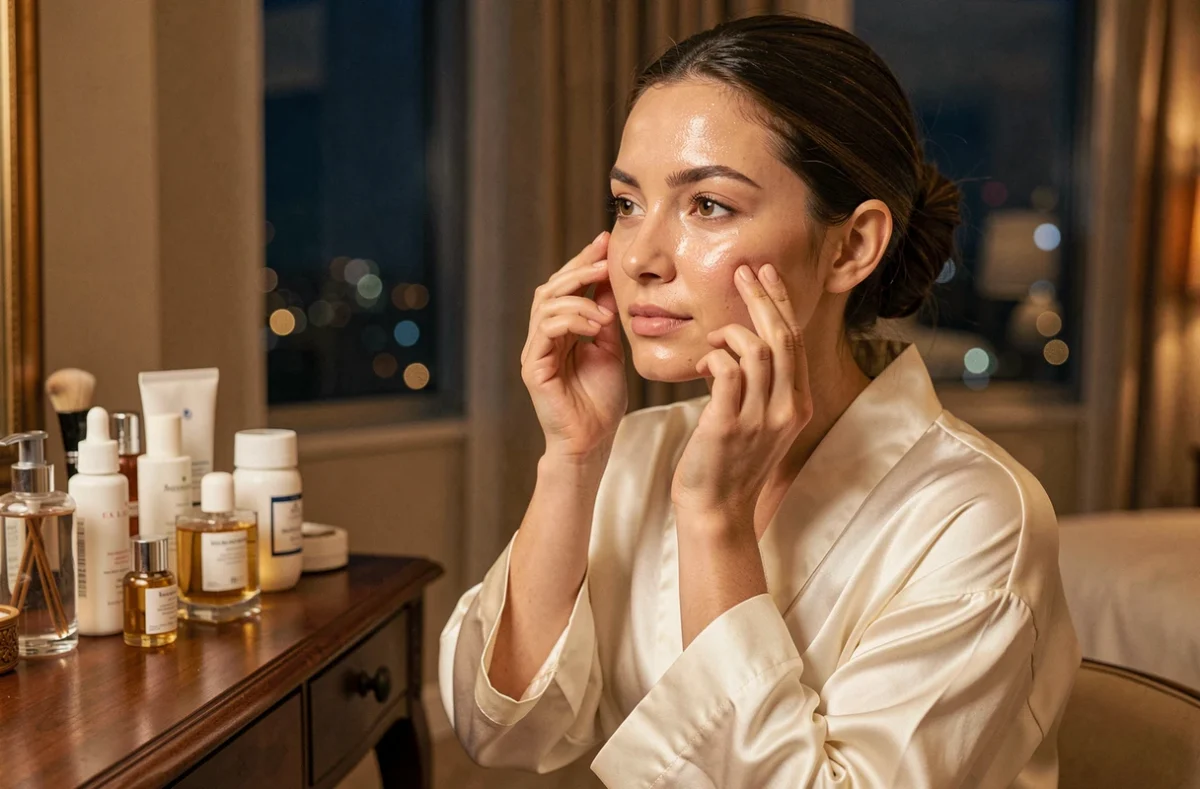
During the night, keratinocytes divide faster, collagen synthesis accelerates, and skin permeability increases.
This process relies on precise hormonal and molecular mechanisms governed by the circadian clock. Understanding it means looking beyond the simple advice to “get a good night’s sleep” and examining what actually happens in skin cells.
Transepidermal permeability and the absorption of nighttime active ingredients
The skin barrier function fluctuates over a 24-hour period. During the day, the epidermis prioritizes protection: transepidermal water loss (TEWL) remains low, and intercellular lipids form a tight seal. At night, this seal loosens.
At night, the skin barrier becomes more permeable. This window is not a flaw: it coincides with the skin switching into repair mode, when topical active ingredients penetrate more effectively. This shift largely explains why the body glows at night.
Nighttime formulations take advantage of this window. Retinol, peptides, and low-molecular-weight hyaluronic acid diffuse more easily through a temporarily more porous stratum corneum. Applying these same active ingredients at midday does not result in the same absorption rate.
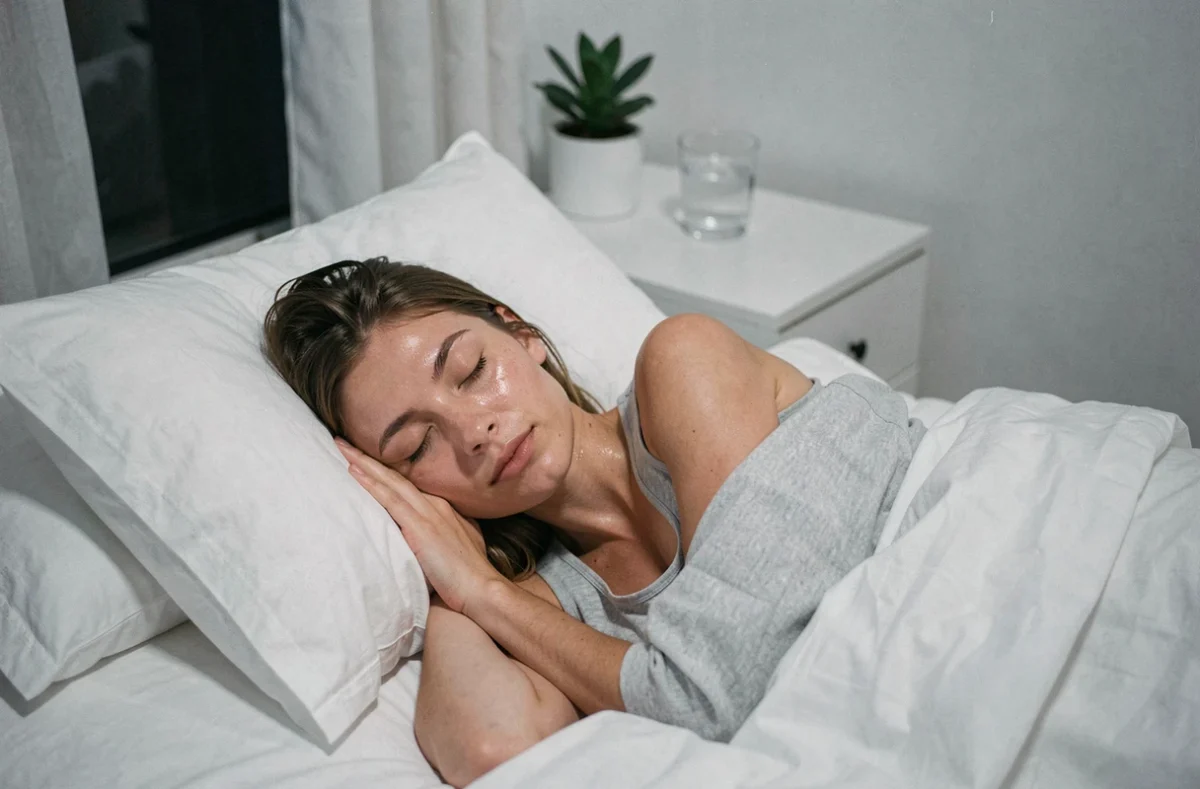
How this affects your choice of textures
A water-based serum penetrates faster at night than a rich emulsion. Occlusive formulas (butters, waxes), on the other hand, may hinder nighttime skin respiration by covering a barrier that is already more open. The question of whether a thick night cream is necessary deserves a nuanced answer based on skin type and season.
Melatonin and skin cell repair during sleep
Melatonin does more than regulate sleep onset. This hormone, secreted by the pineal gland as light fades, also acts as a direct antioxidant in skin cells. It neutralizes free radicals produced by daytime exposure to UV rays and pollution.
During deep sleep, growth hormone (GH) is released in pulses. It stimulates the proliferation of dermal fibroblasts and collagen production. This melatonin-GH pairing forms the biochemical foundation of nighttime regeneration.
Short sleep and measurable changes in complexion
A 2023 study published in the Journal of Clinical Medicine observed an increase in facial yellowness after one sleepless night and after several nights of restricted sleep. Redness, however, did not change under this protocol. Measured using colorimetry, this finding shows that sleep deprivation can quickly alter certain objective skin markers.
We should be cautious: one difficult night does not necessarily cause a visible change in everyone. The experimental conditions (young participants, controlled sleep deprivation) do not translate directly to everyday life.
Skin barrier recovery and sleep quality
A 2015 study published in Clinical and Experimental Dermatology compared 60 women grouped according to their sleep quality. After an experimental disruption of the skin barrier (tape stripping), the good-sleeper group showed greater barrier recovery at 72 hours.
This protocol establishes an association, not an isolated causal link. Other factors (stress, diet, sun exposure) probably played a role. The finding is still valuable: it confirms that sleep quality affects the skin’s ability to recover after damage.
- Deep sleep (stages 3–4) is when GH secretion peaks, and tissue repair is most active.
- Micro-awakenings fragment these cycles and reduce time spent in deep slow-wave sleep, limiting the window for regeneration.
- Blue light from screens used before bed delays melatonin secretion and shifts the entire nighttime hormonal cascade.
Red light and circadian rhythm: current promises and limitations
Red light (630–660 nm) is sometimes preferred in the late afternoon or evening in certain dermatological or muscle recovery protocols because it falls outside the blue spectrum known to suppress melatonin secretion.
However, human data remain limited. Available studies involve small samples and short durations. The effect on sleep itself (sleep onset and sleep-cycle architecture) has not yet been robustly demonstrated in humans.
What red LED light does not do
Red LED light does not directly accelerate collagen synthesis during sleep. The mechanisms studied (mitochondrial stimulation, ATP production) relate to in-office treatments using precise power and distance settings. A low-irradiance home LED mask does not replicate these conditions.
- Red light therapy panels used in research deliver controlled irradiance, measured in mW/cm², to a targeted area.
- Consumer wearable devices rarely disclose their actual specifications, making comparisons with clinical protocols unreliable.
Nighttime beauty relies on documented biological mechanisms: the circadian clock, melatonin secretion, and increased skin permeability. Topical treatments applied at the right time take advantage of a genuine physiological window. But the temptation to add light-based devices or complex routines should be weighed against the available evidence, which remains fragmented on several points. Sleep duration and depth remain the best-documented factors for supporting this regeneration.