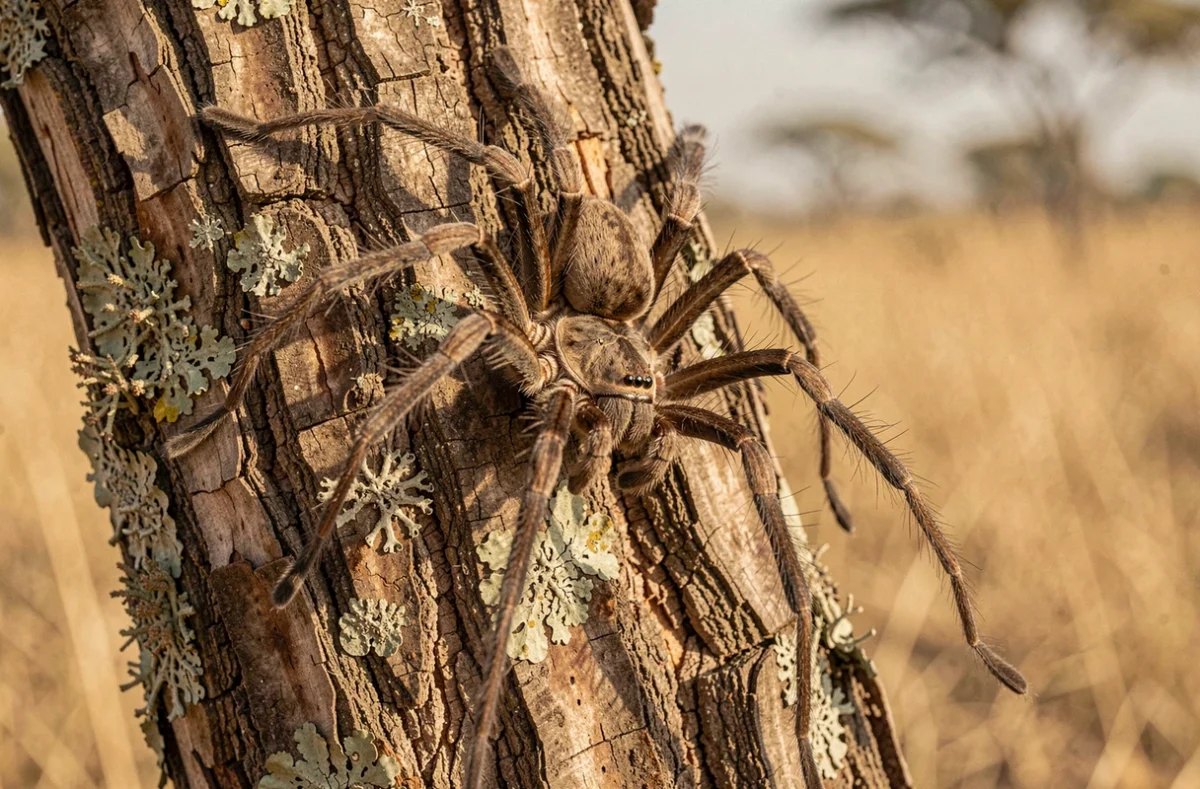
The knife spider is an arachnid that has only the name of a spider. Classified in the order of Solifugae, it is distinguished from true spiders by the absence of silk glands and by oversized mouthparts, the chelicerae, which it uses to capture and cut its prey. Found in several arid regions of Africa, it remains largely unknown to the general public despite its spectacular morphology.
Solifuge and spider: a persistent zoological confusion
The term “knife spider” circulates in popular descriptions, but it obscures the taxonomic reality. Solifuges form a distinct order within arachnids, just like scorpions or opiliones. They share with spiders a segmented body and four pairs of legs, but the resemblance stops there.
Unlike spiders, solifuges do not spin any webs to hunt. They are active predators that scurry across the ground at high speed, often at night, to pounce on insects, small lizards, or other arachnids. Their quick movements and imposing silhouette have long fueled exaggerated tales about their danger.
This confusion is reinforced by the recent discovery in Angola of a horned spider that has made headlines. Well documented by knife spiders from Africa constitute a distinct subject from this Angolan discovery, even though the two are often mixed up in search results.
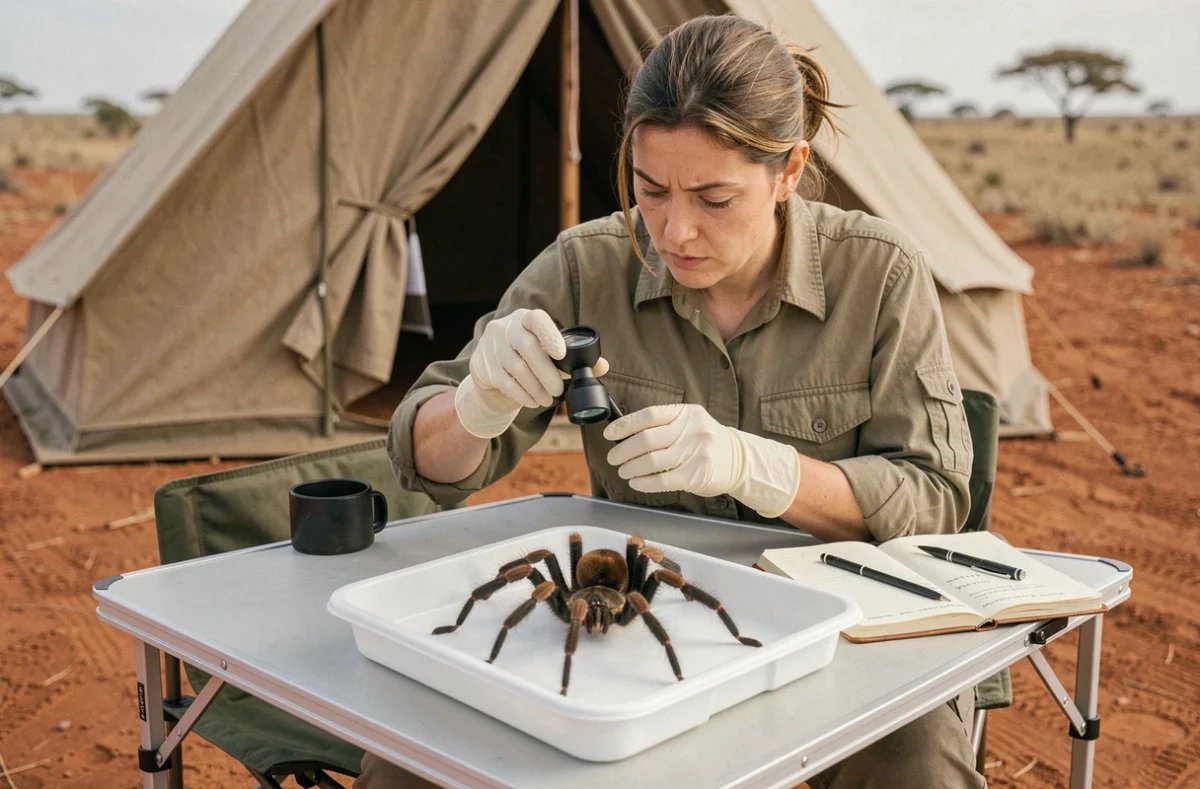
Chelicerae of the solifuge: anatomy of a predation tool
The chelicerae are the most striking feature of solifuges. These two articulated appendages, located at the front of the body, function like pincers capable of slicing through the tissues of their prey. Their size, sometimes almost as long as the body of the animal, justifies the nickname knife spider.
Each chelicera has a fixed finger and a movable finger. The jaw closes with enough mechanical force to pierce the cuticle of a beetle or the skin of a small vertebrate. This mechanism relies solely on physical pressure.
Confirmed absence of venom
Solifuges possess neither venom glands nor injection apparatus. A bite may cause a mechanical injury, sometimes painful to humans, but it does not result in any envenomation. This distinction clearly separates them from venomous spiders like black widows or brown recluses.
The confusion persists because the size of the chelicerae is impressive, and because solifuge bites can become secondarily infected. The health risk, when it exists, is therefore related to bacterial superinfection and not to venom.
Malleoli: the unknown sensory equipment of African solifuges
Beyond their intimidating appearance, solifuges possess a unique sensory system. Beneath the fourth pair of legs are structures called malleoli, small paddle-shaped organs associated with the chemical perception of the environment.
These receptors allow solifuges to detect chemical signals in contact with the ground, likely related to locating prey or reproductive partners. Their precise functioning is still partially documented, but their presence constitutes a unique feature among arachnids.
- The malleoli are absent in true spiders, scorpions, and ticks, making them a distinctive taxonomic marker of solifuges.
- Their position beneath the hind legs suggests a role in analyzing the substrate during locomotion, a kind of “chemical reading” of the terrain.
- This sensory adaptation complements a very limited vision: most solifuges have only two simple eyes, grouped on a frontal tubercle.
This sensory cocktail (chemical perception at ground level, rudimentary sight, sensitivity to vibrations) makes the solifuge a fearsome nocturnal hunter well adapted to Africa’s arid environments.
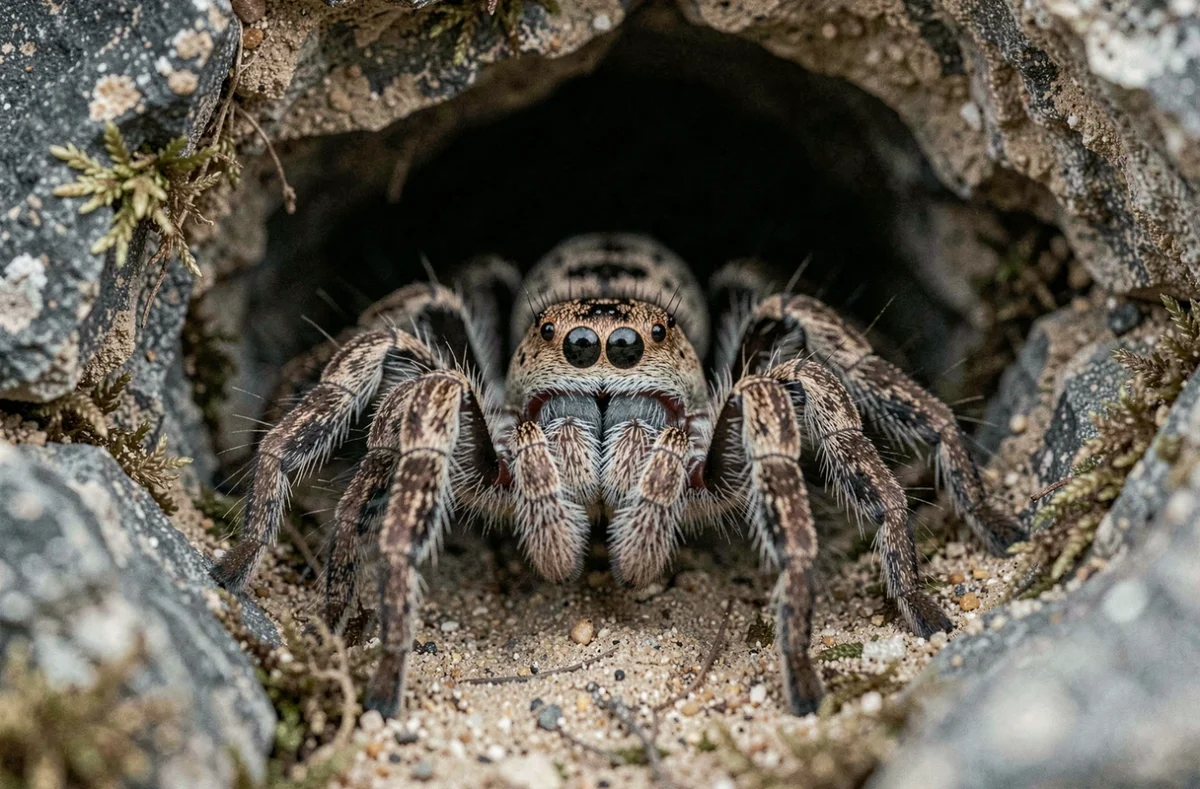
Arid habitat in Africa: where solifuges live
Solifuges primarily occupy dry and semi-desert areas. In Africa, they are found in the Sahel, the Horn of Africa, and the arid regions of Southern Africa. Their distribution also covers the Middle East, Central Asia, and southern Europe, but African populations remain the least studied.
Their activity is primarily nocturnal. During the day, solifuges take refuge under stones, in shallow burrows, or under plant debris to escape extreme temperatures. This daytime discretion partly explains why they go unnoticed by local populations and passing naturalists.
An underestimated ecological role as a predator
In arid ecosystems, solifuges occupy a position as intermediate predators. They regulate populations of insects and small arthropods while serving as prey for nocturnal birds, lizards, and insectivorous mammals.
- Their diet is opportunistic: termites, beetles, crickets, small scorpions, and spiders are among their regular prey.
- They play a regulatory role in environments where the food chain has few intermediate links.
- Their local disappearance could lead to a proliferation of harmful insects in areas already fragile from an agricultural standpoint.
The study of African solifuges is progressing slowly, hindered by difficult access to terrains and a lack of specialists. Several families, such as the Daesiidae, include species described only from a few collection specimens, without recent ecological data.
African solifuges illustrate a frequent paradox in zoology: a spectacular animal, present over a vast territory, but which science still knows in a fragmented manner. Their appearance as fearsome predators masks an arachnid harmless to humans, whose true interest lies in its sensory adaptations and its role in arid ecosystems.