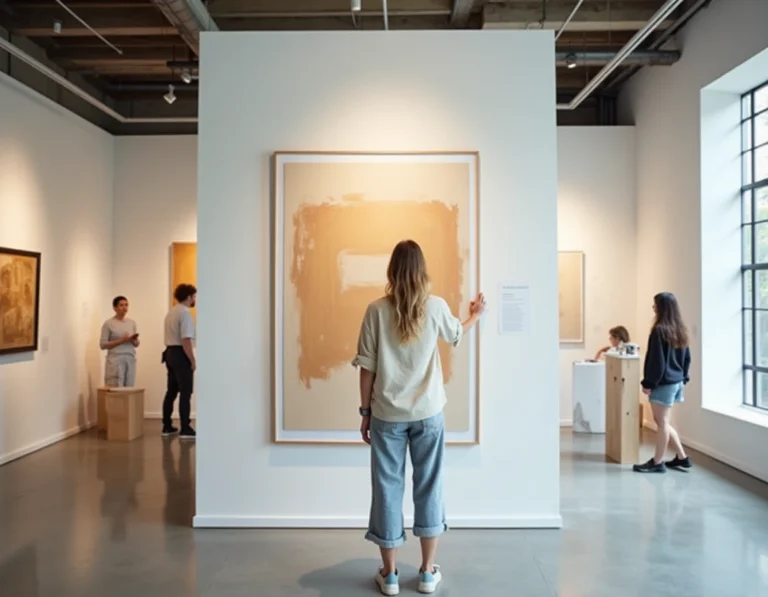
The term “nude” in art has never been limited to a simple absence of clothing. Museum institutions, depending on their eras, have sometimes censored and then celebrated these works, oscillating between aesthetic admiration and moral suspicion. Some artists, however, have circumvented the ban, imposing their vision in contexts where the exhibition of the body remained controversial.
The popularity of the genre has fluctuated with artistic movements, technical innovations, and societal debates. Its reception continues to spark discussions about representation, identity, and the gaze directed at the human body.
The artistic nude: origins, definitions, and key characteristics
The artistic nude has always shaped the great pages of Western art history. From Antiquity, the Greeks elevated the representation of the human body to the rank of ideal, sculpting strength, balance, and beauty as tributes to the human condition. Rome took up the torch but gave way to a more modest Middle Ages, where nudity was confined to religious scenes, codified and often marginalized. Then the Renaissance brought a breath of fresh air: in Florence and Rome, the body regained its centrality, and sculpture and painting became the grounds for experimentation. Michelangelo sculpted powerful figures, Botticelli offered the Birth of Venus, a symbol of regained grace. The works of this era blur the lines between sacred and profane, between devotion and sensuality.
In the halls of the Condé Museum or the Orsay Museum, one encounters the nudes of Giulio Romano, Marcantonio Raimondi, as well as mythological and religious figures. The female nude gradually imposes itself, sometimes a subject of scandal, sometimes of admiration. The dukes of Berry do not mistake it and commission works, while all of Europe debates the relationship between beauty and decency. Kenneth Clark, a famous historian, asserts: the nude is not just a motif, but a key to understanding Western civilization.
Now, the meaning of nude far exceeds the mere question of the exhibition of the body. In artistic circles and well beyond, the term triggers analyses and positions: it questions the boundary between representation and gaze, between individual freedom and social norms. The works of the 16th century as well as the most recent creations reflect a plurality of viewpoints, where art history brushes against contemporary issues of identity and perception.
How has the nude evolved throughout art history?
It is impossible to summarize art history without highlighting the transformation of the gaze directed at the human body. From the Antiquity that glorifies anatomy to the Renaissance that reactivates the classical ideal, each era leaves its mark. In Florence or Rome, the rediscovery of Greek art inspires painters and sculptors. Michelangelo makes the body an architecture, Botticelli reinvents sensuality with his Venus.
The following centuries see the representation of the body diversify. In the 16th century, both in the north and south of Europe, artists and workshops carve their own paths. The nude of Adam and Eve, mythological heroines, young women painted by Giorgione or Masaccio: each of these figures dialogues with the codes and taboos of their time. Paris becomes a hub of creation, France a crossroads where painting and sculpture blend ancient heritage and creative boldness.
The tension never weakens between the celebration of the body and social constraints. Mythological scenes reign in salons, while other works remain shielded from official scrutiny. The academic painting of the 19th century imposes models, then the 20th century opens new horizons: other forms, other debates. At each stage, the nude questions society about freedom, beauty, and the place of the intimate in public space.

Contemporary perspectives: between creative freedom, debates, and new interpretations
Currently, nudity and representation of the body are being constantly reinvented. Artists and photographers push boundaries, exploring new languages, sometimes provocative, often surprising. Major institutions such as the Orsay Museum showcase works that question the place of the human body in our societies. Paris, Berlin, Washington: all scenes where nudity confronts a plurality of opinions and sensitivities.
The representation of feminine or masculine forms is no longer limited to the classical ideal. The female body asserts itself in all its diversity, far from the canons of the past. Photography, video, installations: mediums multiply, codes are revisited. Artists seize the nude to challenge stereotypes, denounce injunctions, and open spaces for reflection on the body and its perception.
Around visibility and censorship, the lines are shifting. Social media impose filters and rules, while museums and galleries defend creative freedom. The work of an Albrecht Dürer or a Kenneth Clark dialogues today with militant, sometimes dissenting practices. The nude becomes a field of experimentation, a medium for assertion, a terrain where society questions its own limits. The debate remains open: what does the nude say today about our relationship to the body, to freedom, to norms? It is impossible to freeze the answer, and that is its true strength.