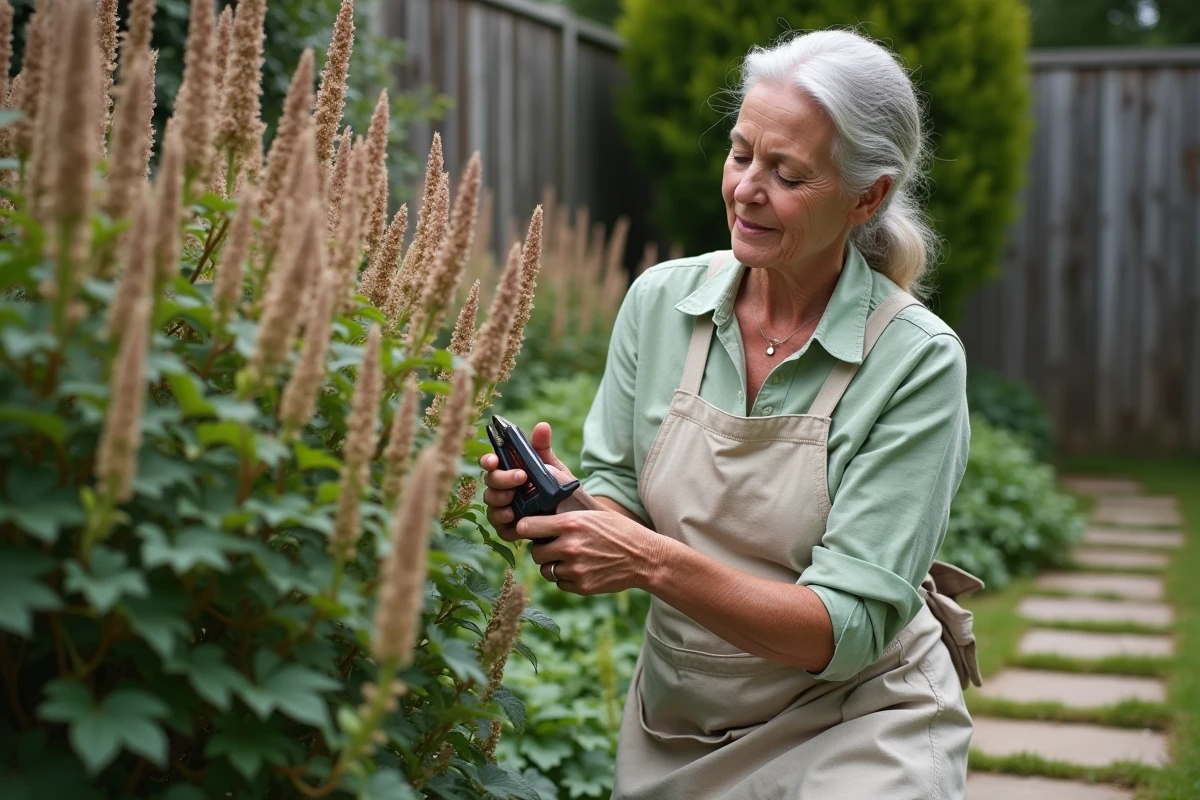
The buddleia (Buddleja davidii) blooms on new wood: the panicles appear only on the shoots formed after the last winter. A butterfly bush that no longer blooms signals a problem with pruning, soil, or physiological exhaustion, not just a lack of watering.
Buddleia blooming on new wood: the mechanism to understand before acting
Most summer-flowering shrubs share this characteristic: they produce their flowers on the branches that grew in spring. The buddleia is a prime example. If the old branches are not shortened each late winter, the plant expends its energy feeding unproductive old wood instead of generating new flowering shoots.
Specifically, a buddleia that has not been pruned for two or three seasons develops a tall, bare silhouette at the base, with a few sparse flowers at the tips of the branches. The visual signal is clear: when the blooming recedes to the top and the center of the shrub empties, it is the old wood that monopolizes the sap.
To make a butterfly bush bloom again, the first step is to restore this renewal cycle by severely cutting back the stems before the vegetative restart.
Buddleia regeneration pruning: actions and timing
The intervention window is between late February and mid-March, depending on the region. The principle: cut each stem back to two or three pairs of buds above the stump, about thirty centimeters from the ground for an adult plant. This action, which seems radical, triggers an explosion of new vigorous shoots as early as April.
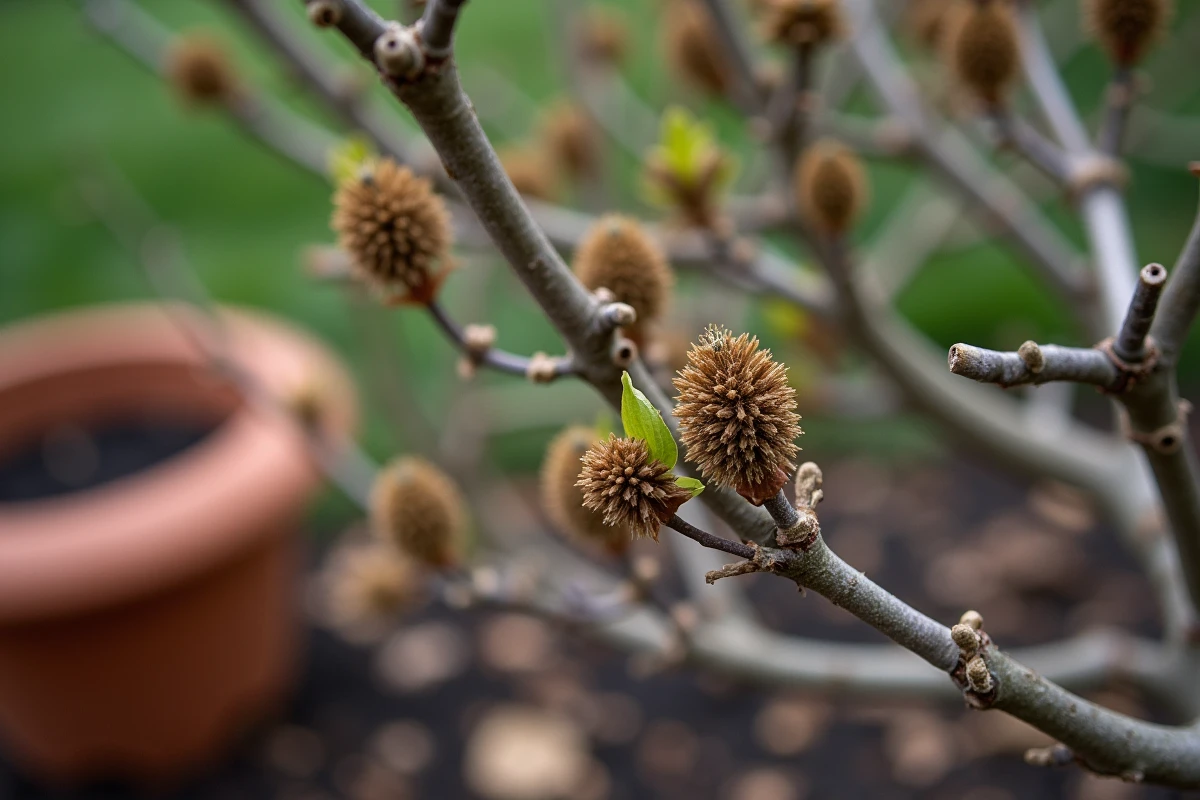
Some methodological points for this regeneration pruning:
- Use a sharp pruner for thin branches and loppers for branches thicker than an inch, to achieve a clean cut that heals quickly.
- Cut at an angle just above a pair of buds facing outward, so that future shoots spread away from the center and allow air circulation.
- Completely remove dead or dry branches down to the base, without leaving a stub that could become an entry point for fungi.
- Eliminate any remaining seed panicles from the previous season, as they consume resources and promote dispersal, a well-documented ecological issue for this species.
If the shrub has not been pruned for several years, a single regeneration cut may be sufficient. The buddleia tolerates cutting back very well: even cut back to the ground, it will regrow from the stump if it is healthy.
Poor soil and shaded location: two causes of buddleia non-blooming
The buddleia tolerates mediocre soils, and this reputation as an easy plant masks a more nuanced reality. Soil that is too rich in nitrogen, for example after repeated applications of fresh compost, stimulates leaf growth at the expense of flowers. Conversely, compacted or waterlogged soil suffocates the roots and hinders flowering.
The buddleia needs full sun to bloom abundantly. A plant placed under the canopy of larger trees or against a north-facing wall will produce foliage but very few panicles. If the shade has gradually set in (growth of a neighboring tree, construction of a building), transplanting to a sunny location is still possible in the fall.
For the soil, adding potash in late winter (untreated wood ash, for example) encourages flowering. Avoid pure nitrogen fertilizers between March and June: they push the plant to produce leaves, not flowers.
Buddleia that no longer blooms after fifteen years: biological limit and alternatives
Beyond fifteen to twenty years, the buddleia naturally exhausts itself. Entire branches dry out, the shrub becomes bare from the center, and vigor declines irreversibly. No pruning can correct age-related exhaustion: replacement becomes the most effective solution.
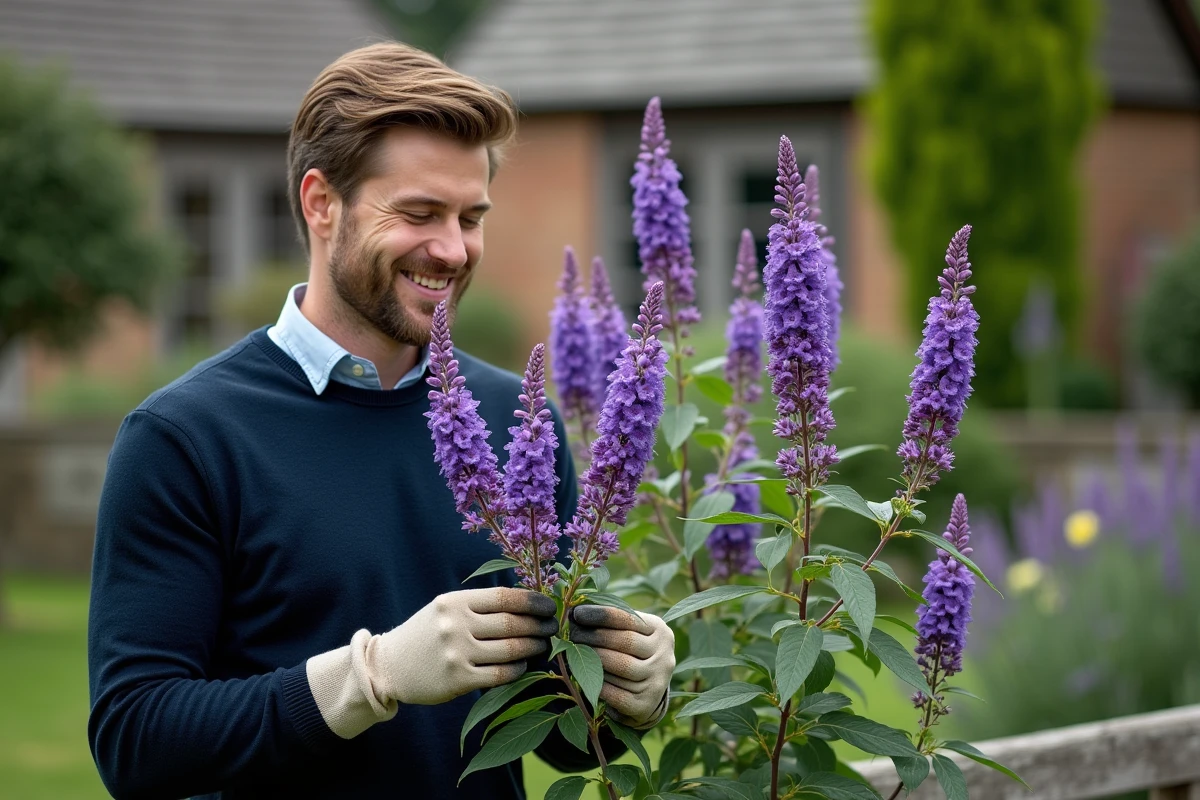
Before replanting a new buddleia in the same spot, one point deserves consideration. The butterfly bush feeds adult butterflies with its nectar, but does not serve as a host plant for their larvae. For a garden truly favorable to pollinators, pairing the buddleia with plants that also nourish caterpillars (nettles, fennel, clover) significantly enhances the setup.
The Polygala myrtifolia appears as an interesting substitute in mild climates: a perennial shrub with mauve flowers, capable of blooming for a large part of the year. Its compact silhouette and drought resistance make it a credible candidate to replace a buddleia at the end of its life in Mediterranean or Atlantic regions.
Removing faded flowers from the buddleia in summer: extending the bloom
Once the late winter pruning is done and the summer blooming has begun, a simple action can extend the flowering period by several weeks. Removing each panicle as soon as it starts to brown prevents seed formation and redirects energy towards new inflorescences.
Cut the flower stem just above the first well-formed pair of leaves below the faded panicle. This action, repeated every two weeks between July and September, can trigger a second wave of flowering, more modest than the first but sufficient to attract butterflies until the first cool days.
A buddleia that no longer blooms is not doomed, provided the exact cause is identified. Forgotten pruning, gradual shading, unbalanced soil, or the end of the biological cycle: each situation calls for a different response. Cutting back remains the most effective action on a still viable subject, while a shrub over twenty years old is better replaced with a young plant or an alternative species better suited to the garden.