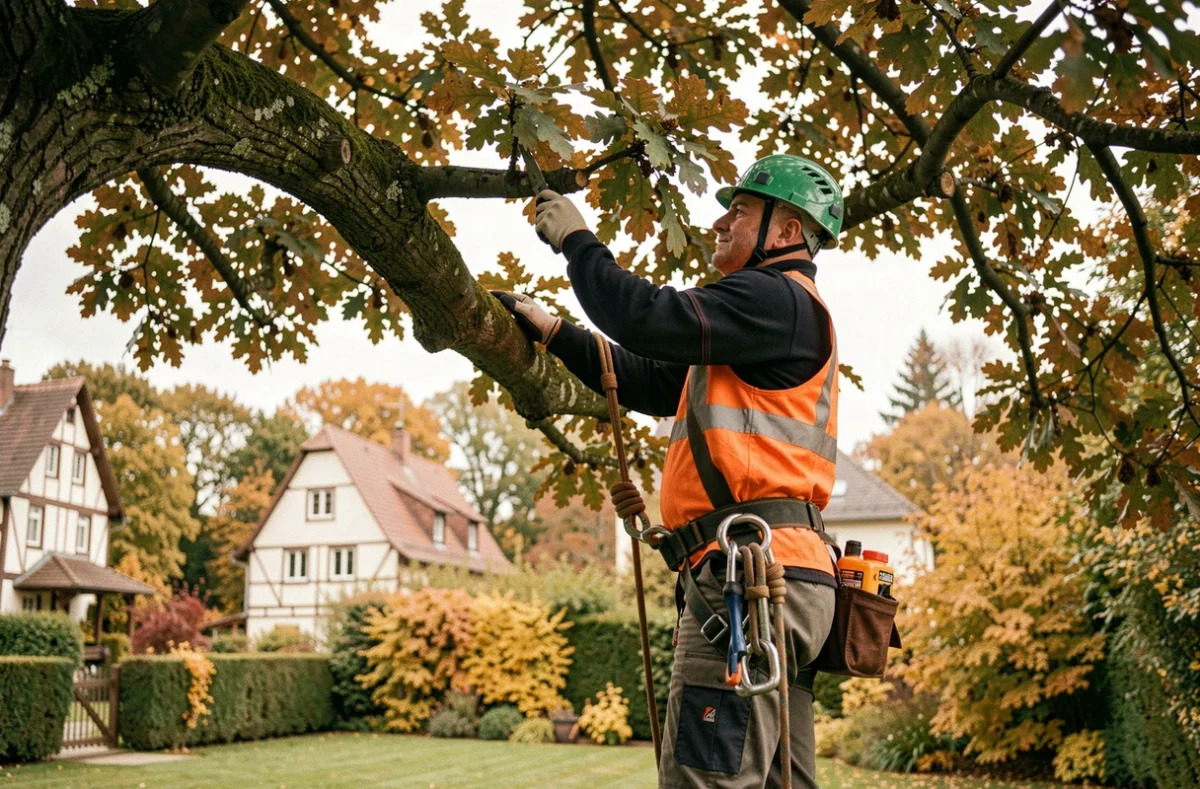
Pruning a tree on a property in Winterstein is about more than just shortening troublesome branches. Before any work begins, local regulations may restrict the permitted cuts: a tree designated as a landscape feature in the local urban plan (PLU) or located in a protected woodland area requires a prior declaration. A professional who fails to ask about this before preparing a quote could expose the property owner to a planning violation.
Tree pruning in Winterstein: check for property protections before making the first cut
The first step does not involve the tree surgeon, but the town hall. Checking the PLU regulations and zoning maps that apply to the property will show whether the tree is protected. A protected woodland area, for example, prohibits any change of use or form of land occupation that could compromise the preservation of the woodland.
This preliminary check changes the very nature of the work. A protected tree cannot be treated like an ordinary tree: pruning must be compatible with preserving the tree. Be wary of a tree surgeon who provides a quote without checking these documents, or who claims that “it isn’t necessary.”
Article 673 of the French Civil Code does allow a neighbor to demand that branches overhanging their property be cut back, but this provision does not override planning rules governing the removal or alteration of a protected tree.
To compare information about service providers working in the Winterstein area, the Clic Garden website outlines what to check before contacting a tree-pruning company.
Tree surgeon qualifications: what certifications cover and what they do not guarantee
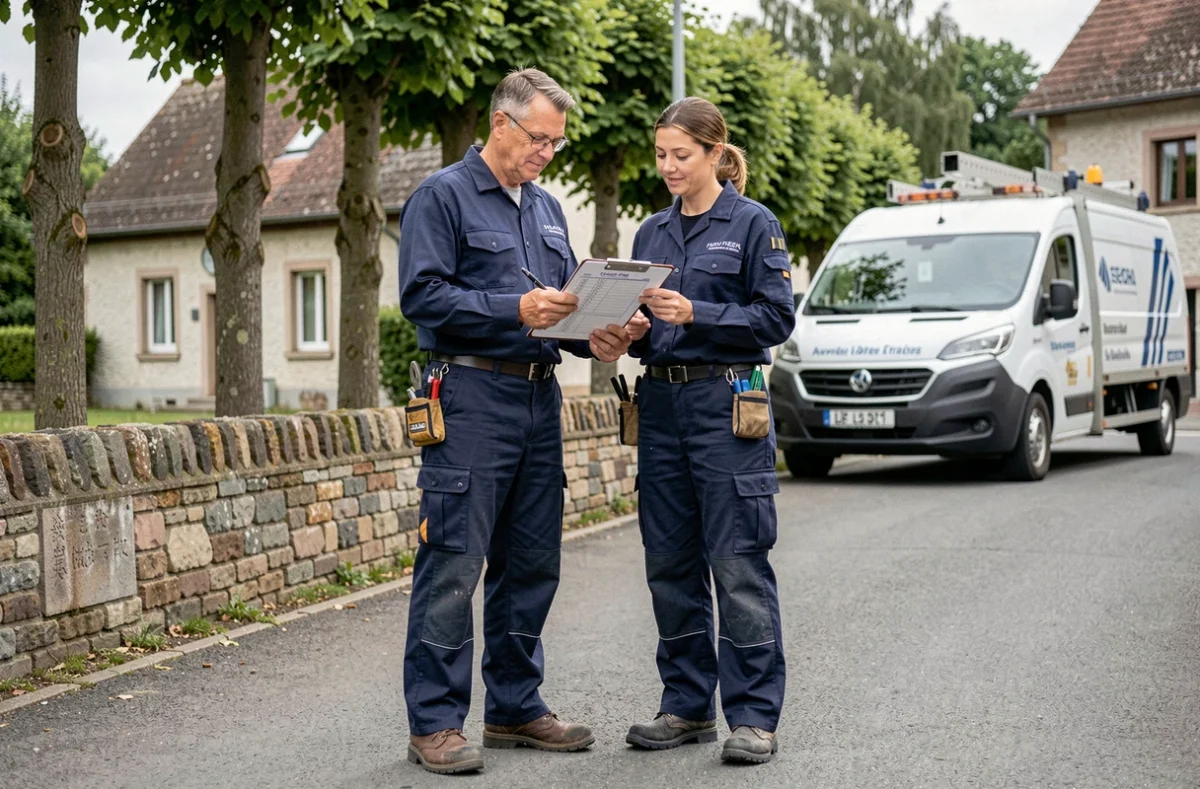
Specialist training in arboriculture and tree pruning covers tree assessment, site preparation, techniques for accessing and moving through the canopy, considered pruning, and dismantling. Asking for exact training credentials and details of the crew assigned to the job is the most direct way to assess a service provider.
The qualifications a company advertises do not tell you who will actually be working on site. A business owner may hold a specialist “arborist-tree surgeon” certificate while sending a worker with a very different background to do the job. Finding out who will actually climb the tree is a perfectly reasonable question to ask before signing a quote.
The limits of a label or certification
A professional label attests to a level of training at a particular point in time. It does not guarantee the quality of the assessment of a specific tree, or that the proposed method is appropriate for the tree’s physiological condition. A tree weakened by wood-decay fungi or with internal cavities requires a careful assessment that only hands-on experience can provide.
For homeowners, the challenge lies in the information imbalance: assessing an arboricultural diagnosis without technical expertise is very difficult. Getting at least two well-supported opinions on the same tree can help identify significant differences in the recommendations.
Tree-pruning quotes: compare the proposed methods, not just the price
A quote that simply says “oak tree pruning, flat fee of X euros” provides no useful information. It should specify the type of pruning proposed (crown reduction, maintenance pruning, deadwood removal, partial dismantling), the access method (climbing or lift), what will happen to the cut material, and the work schedule.
- The type of pruning should be justified by the tree’s condition: a healthy tree should not be pruned in the same way as one with structural defects or an unbalanced crown.
- Timing matters: pruning during peak sap flow can weaken some broadleaf trees, while other species tolerate summer pruning better.
- The planned amount of material to be removed should be included in the quote, even as an estimate: removing more than a third of the canopy in a single operation weakens most trees.
- Removing and chipping branches can add significantly to the cost, depending on how accessible the property is.
A significant price difference between two quotes often reflects a difference in approach. The lowest bidder, proposing drastic topping where a competitor recommends targeted, light pruning, is not offering the same service—and the medium-term effects on the tree will be completely different.
Tree pruning and neighbor disputes in Winterstein: distinguish legal obligations from routine maintenance
A neighbor who demands that branches overhanging their property be cut back is relying on Article 673 of the French Civil Code. This right exists, but it is not a blank check. Confusing the pruning of overhanging branches with the complete removal of a tree is a common mistake that could make the tree’s owner liable if the tree is protected.
A responsible professional will flag these checks before starting work. They will distinguish between private law (cutting back overhanging branches) and public law (a prior declaration to alter a tree protected under the PLU). If the tree surgeon you contact makes no distinction between these two frameworks, it is wise to seek a second opinion.
When the service provider should alert the client
The duty to advise is part of the service contract. If a professional tree surgeon notices on site that a tree may be protected (because of a marker, its proximity to a historic monument, or a reference in planning documents), they must inform the client before carrying out any work. Failing to warn the client that a tree is protected may make the professional liable.
- Check with the town hall whether the tree is in a protected woodland area or listed as a notable landscape feature.
- Ask the service provider whether they have previously worked on trees in the area that required a prior declaration.
- Keep a written record of the neighbor’s request if the pruning is prompted by a dispute between neighbors.
Ultimately, choosing a tree surgeon in Winterstein comes down to their ability to adapt their work to the tree and the property. A well-supported assessment, a detailed quote, and knowledge of local regulations provide a more reliable foundation than any tempting price.