Securing a home relies on a set of components that work together: the lock, frame, hinges and door leaf form a complete system. A certified product installed on an unsuitable frame cannot deliver the expected level of performance. This technical reality guides every decision, from simply replacing a cylinder to reinforcing the entire door assembly.
Old door assembly, new lock: the pitfalls of a partial assessment
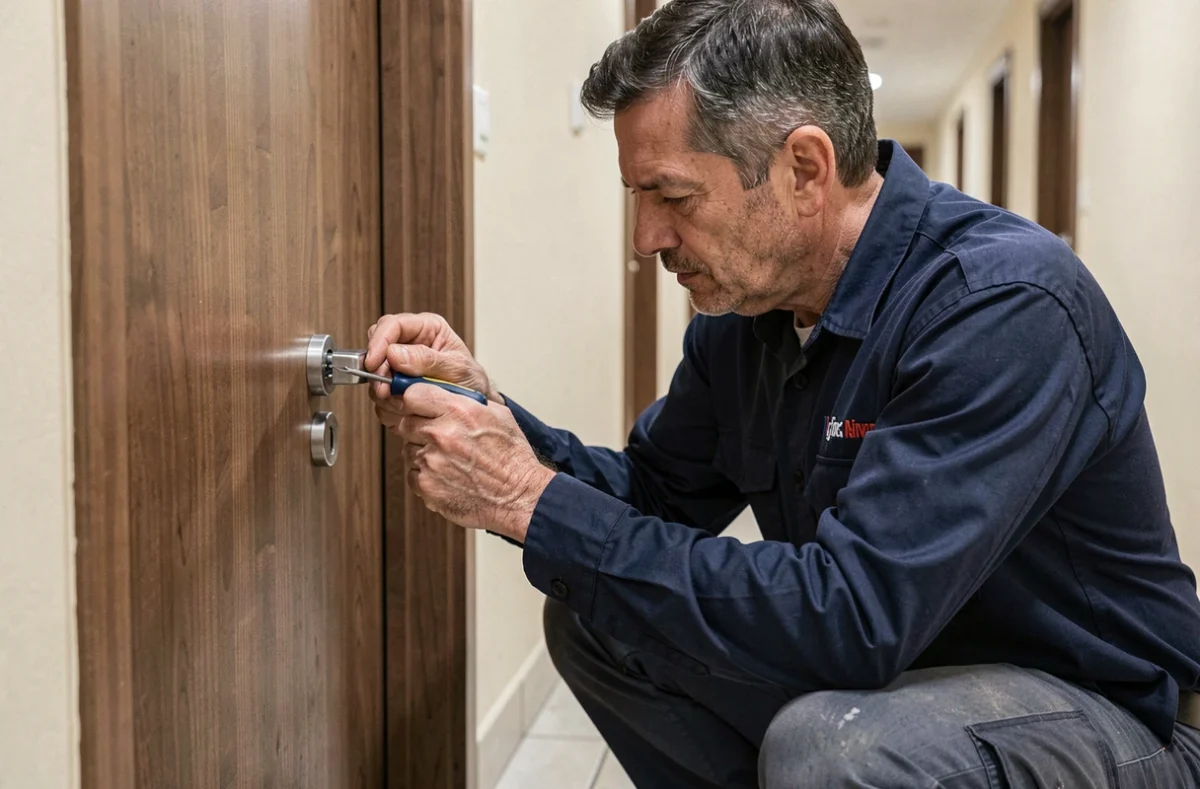
In an older building, the first instinct is often to replace the lock. The reasoning seems sound: a worn cylinder or ageing espagnolette lock appears to be the obvious weak point. But the real weakness may lie elsewhere.
A wooden frame weakened by moisture or corroded hinges can reduce the overall strength of the entrance, regardless of the quality of the lock installed. Laboratory resistance tests are carried out on a complete door assembly (door leaf, frame, hardware and lock). Replacing just one component without assessing the rest is like reinforcing one link in a chain while the others remain weak.
A security assessment should therefore examine three distinct areas: the condition of the structure (frame, threshold and wall fixings), the quality of the door leaf (panel thickness and whether it has armour plating or a reinforcing sheet) and the locking mechanism itself. If the frame is sound, replacing the lock is enough. If the frame is loose or cracked, reinforcing the entire door assembly is the only sensible option.
To keep up with Serrurerie Valbusa news, you can find regular documentation of real-world cases like these, including the technical decisions made based on the condition of the structure.
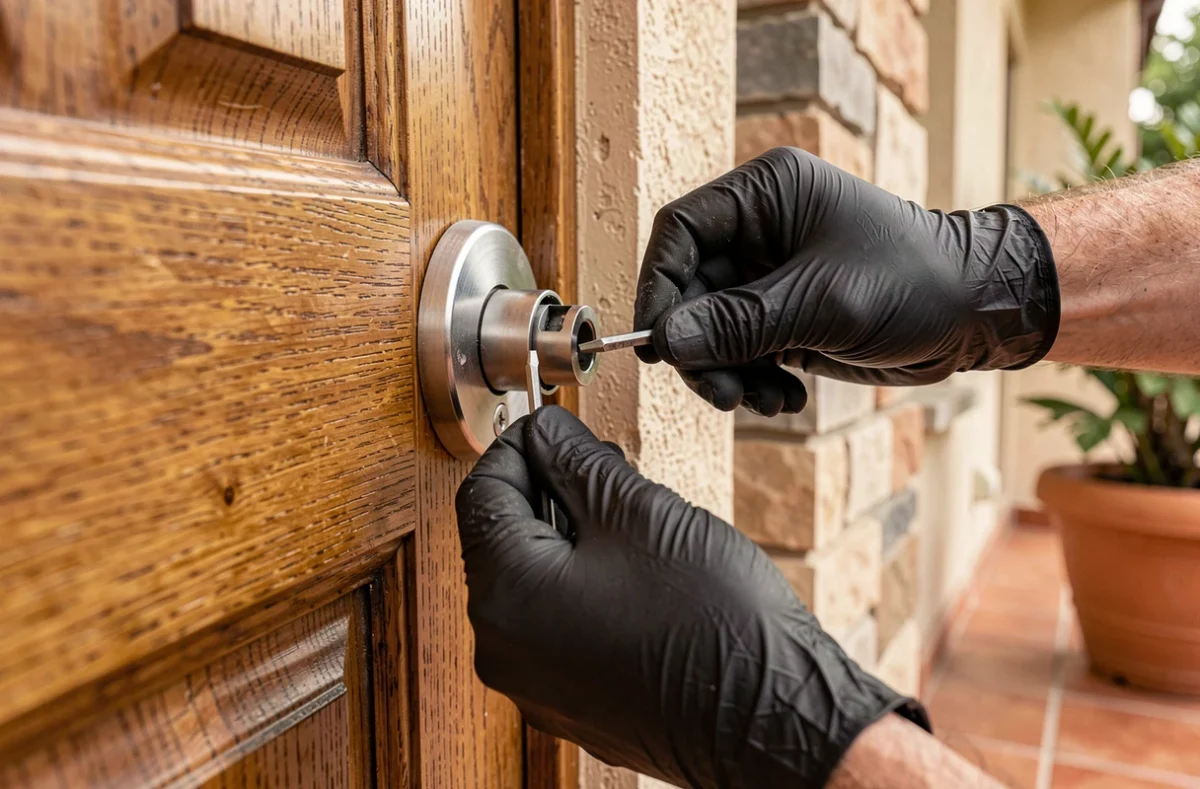
A2P lock certification: what the stars really measure
A2P certification classifies locks according to their resistance to break-ins in laboratory tests. There are three levels, represented by one, two or three stars. The more stars a lock has, the longer it withstands the test conditions.
These times are intended to compare products, not to predict exactly how long a burglar will take to break into a particular door. Real-world conditions (the tools used, the condition of the frame and the door’s exposure) differ from laboratory testing protocols.
Certification and home insurance
A common misconception is that an A2P-certified lock is mandatory to receive compensation after a burglary. The reality depends on the policy. Some policies do require a specific A2P rating, while others only require a multipoint lock without any particular certification.
Before replacing a lock, it is best to:
- Review the policy’s theft coverage clauses to identify the required level of protection (lock type, certification and number of locking points).
- Keep the invoice for the work and the exact reference of the product installed, as the insurer may request them in the event of a claim.
- Check that the certification applies to the product installed, not just a similar model, because a similar reference does not carry the same contractual weight.
Improving security beyond the lock: additional measures
The lock is the main barrier, but a home is better protected when several security measures work together. Each additional feature increases the time needed to break in and deters opportunistic attempts.
Locking points and anti-pry strips
A multipoint lock distributes resistance across several areas of the door assembly (top, bottom and side). On an older door without this system, adding an anti-pry strip protects the gap between the door leaf and the frame, where a crowbar can be inserted most easily.
The strip is fixed to the frame and covers the gap. Its effectiveness depends directly on the quality of its wall fixings: short screws in a softwood frame provide little more than symbolic resistance.
Outdoor lighting and peepholes
A motion-activated light around the front door can change the behaviour of a potential intruder. The sudden light draws the neighbours’ attention and removes the cover of darkness.
An optical peephole (or a digital peephole with an indoor screen) lets you identify visitors without opening the door. For people with reduced mobility, a digital model installed at a suitable height avoids having to bend down to use a conventional peephole, which is often positioned too high or too low.
Burglary statistics and a local security assessment
National burglary figures may show an overall decline without that trend being reflected everywhere. Differences between municipalities, neighbourhoods and types of housing remain significant. An effective security assessment takes local conditions into account, rather than relying on a national average.
Factors that influence the actual risk include:
- The type of home (a detached house set back from the road, a ground-floor flat or an upper-floor flat with balcony access).
- The immediate surroundings (a busy pedestrian route, a secluded cul-de-sac or the presence or absence of street lighting).
- Occupancy patterns (extended absences, a second home or regular schedules).
- The current condition and age of doors, windows and shutters.
A locksmith who carries out an on-site assessment evaluates these factors before recommending any work. This approach avoids unsuitable one-size-fits-all solutions: installing a three-star lock on a house with no window shutters does not provide coherent protection.
Home security works as a system in which each component depends on the others. Replacing the lock without assessing the frame, hinges and secondary access points leaves exploitable vulnerabilities. The best investment is a comprehensive assessment that prioritises work according to the actual risk, available budget and condition of the existing structure.